This article may contain affiliate links. If you click on these links and make a purchase, we may receive a small commission at no extra cost to you. This helps support our website and allows us to continue to produce content like this. Thank you for your support!
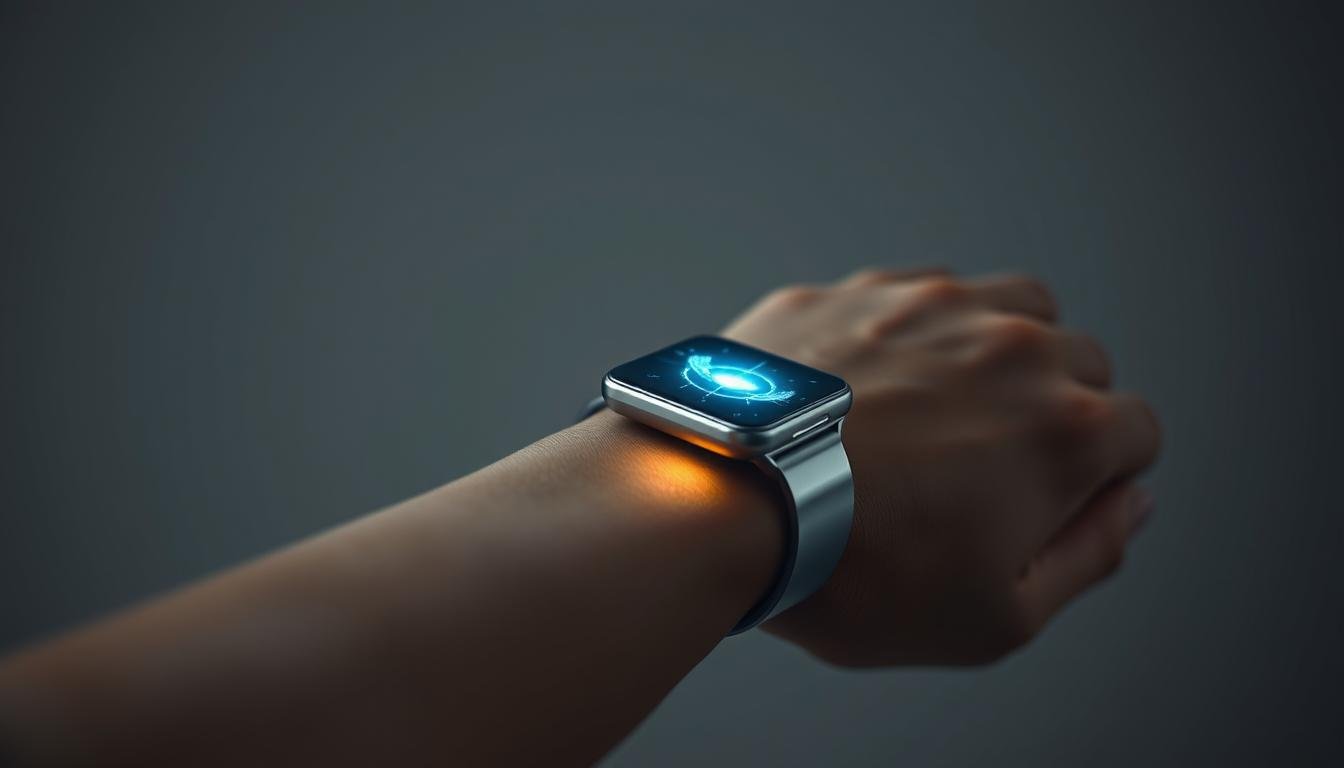
Wearable tech for mental health is getting more popular. Smartwatches can track heart rate and sleep. This gives insights into our mental state.
Wearable tech helps us care for our mental health better. For example, the Apple Watch has deep breathing exercises. This can help us feel better and improve our well-being.
Key Takeaways
- Wearable technology for mental health is a growing trend, with many devices available to track physiological indicators.
- Mental health wearables can provide valuable insights into an individual’s mental state, enabling more proactive and personalized care.
- Mental health tech devices, such as smartwatches, can offer features like guided breathing exercises to help reduce stress.
- Wearable technology can help monitor mood and offer support for mental health by tracking emotions and providing stress-reducing exercises.
- The market for wearable technology is projected to grow significantly, influenced by advancements in artificial intelligence, miniaturization, and connectivity.
- Wearable devices can contribute to improved patient engagement and adherence to treatment plans, enabling real-time monitoring and personalized treatment strategies.
- Wearables can monitor physiological parameters like heart rate, sleep patterns, and physical activity, essential in managing symptoms of depression and other mental health conditions.
What is Wearable Technology for Mental Health?
Wearable technology is key for watching over mental health. Mood tracking wearables and emotional health wearables track body signs. They give clues about how we feel inside.
As more people care about their mental health, wearable mental health monitoring is important. It’s a big part of health care now.
Wearable tech for mental health has cool features. For example:
- It tracks how well we sleep.
- It watches our heart rate and stress.
- It spots mood problems early.
Studies show wearable mental health monitoring really helps. Mood tracking wearables and emotional health wearables help us deal with stress. This leads to better mental health.
How Wearable Devices Work for Well-Being
Wearable devices are key in mental wellness wearables. They help people keep an eye on their mental health. These devices track things like heart rate, sleep, and how active you are. This gives clues about how you’re feeling inside.
These tech solutions for mental health use sensors to gather data. Then, they analyze it to give you feedback that’s just for you. For example, the Apple Watch can see how stressed you are by your heart rate. It also offers breathing exercises to calm you down.
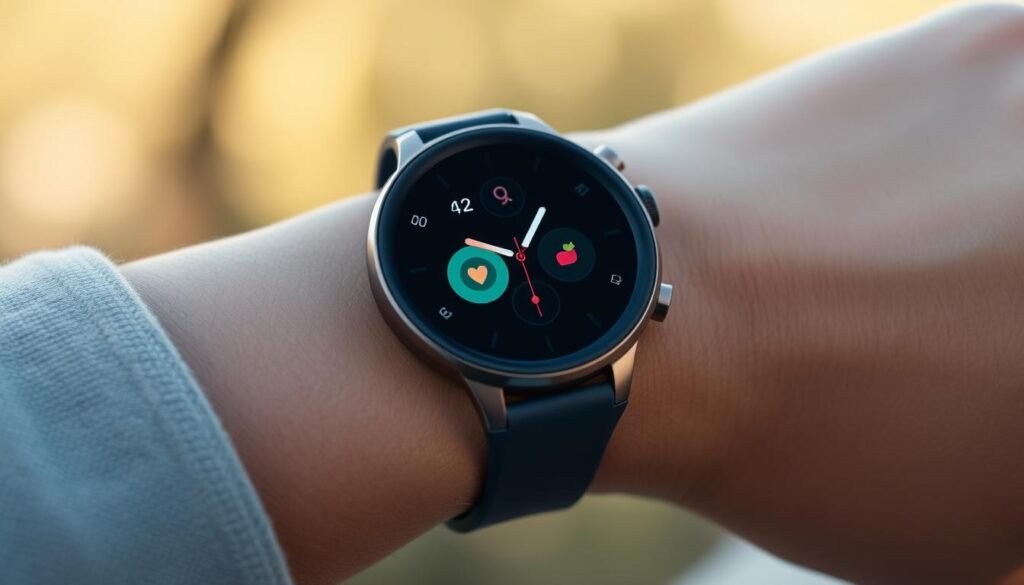
Smartwatches and fitness trackers are great examples. They watch your sleep, how active you are, and stress levels. They help you take care of your mind by changing your daily habits.
Using wearable mental health monitoring and mental wellness wearables helps you understand your mind better. This lets you make smart choices about your mental health. As tech solutions for mental health get better, we’ll see even more cool ways to help our minds.
Popular Wearable Devices for Mental Health
Wearable devices are now big for tracking mental health. Many mental health wearables and mental health tech devices are out there. They offer cool features to help with emotional wellbeing.
Smartwatches and fitness trackers are popular. They can track heart rate and sleep. This helps understand how we feel better.
These wearable devices for emotional wellbeing give us insights into our mental state. They have cool features like guided breathing and stress tracking. For example, the Apple Watch has a “Breathe” app. It helps users relax with deep breathing exercises.
- Apollo: a wearable device that uses vibrations to help reduce stress and anxiety
- Oura: a smart ring that tracks sleep, heart rate, and other biometrics
- Muse: a wearable device that offers biofeedback and guided meditation
These devices are helping people feel better. Many say they feel less stressed and anxious. They also sleep and focus better.
| Device | Features | Benefits |
|---|---|---|
| Apollo | Vibrations, stress tracking | Reduced stress and anxiety |
| Oura | Sleep tracking, heart rate monitoring | Improved sleep, increased energy |
| Muse | Biofeedback, guided meditation | Reduced stress, improved focus |
Tracking Stress Levels Like a Pro
Wearable tech for mental health is getting more popular. Mood tracking wearables and emotional health wearables help track stress. They use heart rate and sleep to understand mental state.
The Apple Watch tracks heart rate variability to show stress levels. It also offers breathing exercises to lower stress and boost mood.
Studies show smartwatches and bands help track stress. They help reduce stress through different ways. This includes helping during stress times and supporting long-term therapy goals.
How Wearables Measure Stress
Wearables measure stress in different ways. They use Electro-Dermal Activity (EDA) and Heart Rate (HR). These methods are about 95% accurate with advanced models.
Fuzzy Logic algorithms also detect stress well. They are better than other methods like Logistic Regression and Linear Discriminant Analysis.
Interpretation of Data and Feedback
Wearables give personalized feedback on stress levels. This helps people find ways to manage stress. It improves mental well-being.
With wearable tech, people can actively manage stress. This helps improve mood.
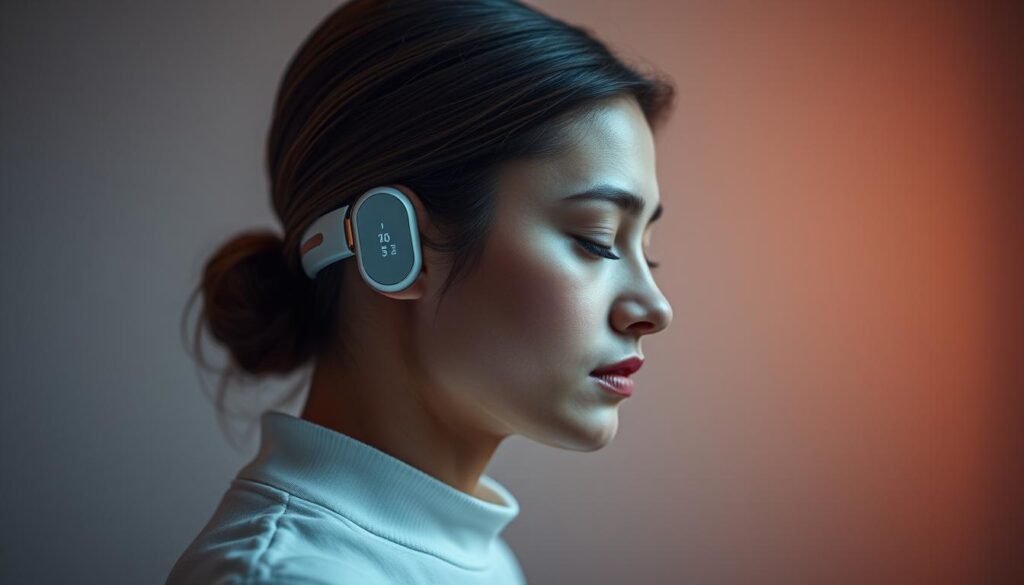
These devices have many features. They track heart rate, sleep, and offer breathing exercises. These help manage stress and improve mental health.
The Sleep Connection: Monitoring Rest
Good sleep is key for our minds. Wearable devices help track how well we sleep. They show how long we sleep, how regular it is, and how well we rest.
Devices like smartwatches and rings watch our sleep. They tell us how good our sleep is. This is very important for our mental health.
Wearable devices track heart rate, skin conductance, and temperature. They give a lot of data on our sleep. This helps us see where we can get better and change our sleep habits.
Using wearable devices for sleep tracking has many benefits. They help us see how long we sleep and how well. They also show us how to improve our sleep.
These devices give us important data. They help us with our mental health and wellness.
Motivation on Your Wrist: Boosting Activity Levels
Being active is key for good mental health. Mental health wearables help people move more. Almost 30% of adults in the U.S. use these devices to check their health.
Exercise can cut anxiety by about 20%. Mental health tech devices give feedback to boost activity. For instance, the Apple Watch tracks how much you move and encourages more.
The Link Between Movement and Mood
Exercise is linked to better mental health. It can lessen anxiety and depression. Wearable devices for emotional wellbeing track activity and show how it affects your mood.
Using mental health wearables has many benefits. It boosts exercise motivation, gives feedback, and improves mental health.
- Increased motivation to exercise
- Personalized feedback to improve physical activity levels
- Improved mental health outcomes, including reduced anxiety and depression
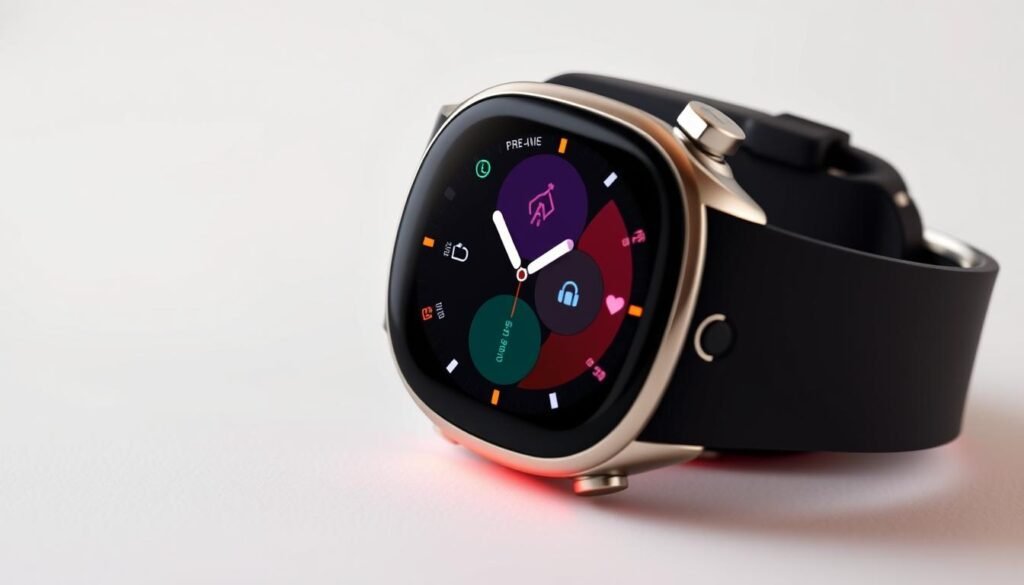
Personalization Through Wearable Tech
Wearable tech offers personalized help. It tracks activity and shares insights on mental health. This helps people change their lifestyle for better mental wellbeing.
| Benefit | Description |
|---|---|
| Increased motivation | Personalized feedback and motivation to increase physical activity levels |
| Improved mental health outcomes | Reduced symptoms of anxiety and depression |
| Personalized feedback | Valuable insights into an individual’s mental state and physical activity levels |
Mindfulness and Meditation Features
Wearable tech for mental health is getting more popular. Many devices track mood and emotions. They offer guided meditations and breathing exercises to lower stress and boost mood.
The Apple Watch has a “Breathe” app. It guides users in deep breathing to reduce stress. The Muse headband gives personalized feedback to help manage stress and improve mental health.
Some key features of mindfulness and meditation wearables include:
- Guided meditations and breathing exercises
- Personalized feedback and guidance
- Real-time stress tracking
- Heart rate variability analysis
These devices are great for improving mental health and well-being. They offer guided meditations and breathing exercises. This helps people develop healthy habits and lower stress.
A recent study found 91.9% of users felt more relaxed with mindfulness and meditation wearables. This shows how wearable tech can positively impact lives.
| Device | Features | Benefits |
|---|---|---|
| Apple Watch | Guided meditations, breathing exercises | Reduced stress, improved mood |
| Muse headband | Personalized feedback, real-time stress tracking | Improved mental health, reduced anxiety |
Real-World Impact: User Experiences
Wearable mental health monitoring is becoming more popular. Many users are seeing good results. Studies show that 80% of people like using fitness trackers with mental health help from brands like Fitbit and AbleTo.
These devices help people know more about their mental health. A study found that 60% of users noticed they were more aware of their feelings after using them. Another study showed that 60% of people felt less anxious after three months of using smart wearables.
Success Stories
- 25% reduction in stress levels observed by a young professional using stress-tracking wearable technology within one month
- 30% increase in overall well-being reported by early users of a wearable designed for mental wellness after six weeks
- 79% of employees at a leading tech company felt more focused and less anxious after using wearables to manage mindfulness routines
Wearable devices are changing how we think about mental health. They give feedback and help people make better choices. As more people use them, it’s clear they’re here to help us.
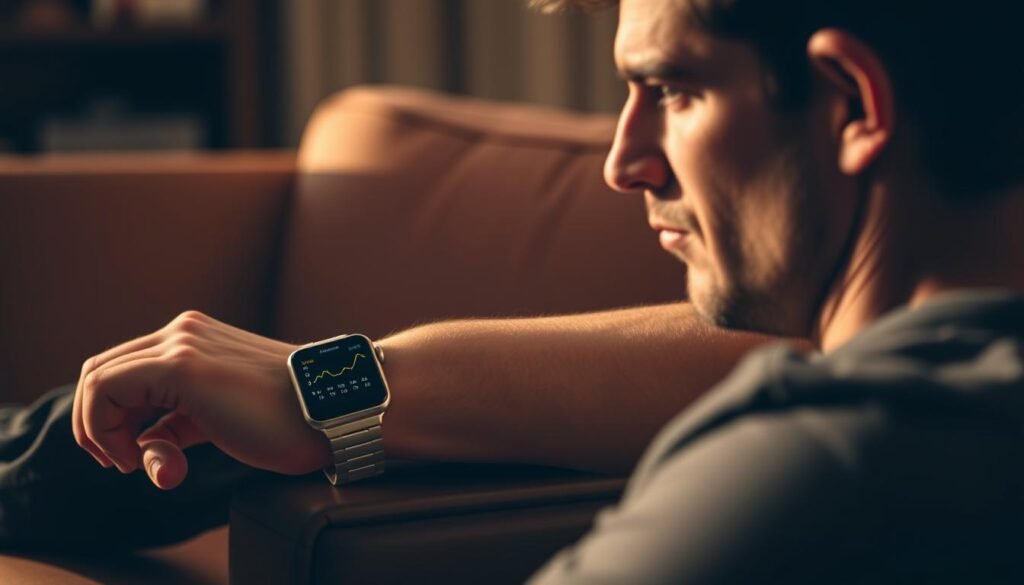
Experts Weigh In: What the Professionals Say
Experts in psychology and technology have a lot to say about mental health wearables. Studies show these devices can spot signs of depression and anxiety. For example, Oura sets daily goals and gives feedback on stress levels.
Wearable devices offer personalized feedback and help users track their mental health. Dr. David Anderson says, “Wearable devices can change how we care for our mental health. They give people the tools to control their wellbeing.”
Experts suggest using these devices with traditional mental health care. This combo helps people build healthy habits to handle stress. Devices like the Apple Watch track heart rate variability, showing stress levels.
- Using wearable devices to track mental health metrics, such as stress levels and sleep quality
- Combining wearable devices with traditional mental health care for more comprehensive care
- Empowering users to self-monitor and manage their mental health effectively
By using mental health wearables, people can manage their mental health better. As tech for mental health grows, we’ll see more ways to help our emotional wellbeing.
Privacy Matters: Data Security in Wearables
When we use wearable technology for mental health, keeping our data safe is key. We track our mood and stress levels. We want to make sure our personal info stays private.
Many wearables, like mood trackers, have strong security. For example, the Apple Watch uses end-to-end encryption. Also, many makers follow rules like GDPR and HIPAA to keep health info safe. But, it’s important to remember that no system is perfect. Users should know the risks of wearable tech.
Here are some ways to keep your data safe:
- Check if the maker is good at keeping data safe
- Choose devices with two-factor authentication
- Always update your wearable’s software
By being careful and aware, we can use emotional health wearables safely. This way, we can enjoy their benefits while keeping our data private.
The Future of Wearable Tech in Mental Health
Wearable tech is changing how we care for our minds. It lets us track stress, sleep, and more. This info helps doctors make better plans and catch problems early.
These devices are getting smarter, thanks to AI and machine learning. They give advice that fits just right for you.
Some cool tech uses digital signs like voice and face to spot sadness and worry. Feel Therapeutics is making gadgets that watch your skin and heart. They help see how you’re feeling.
Wearing these devices has many good points. A study in Frontiers in Digital Health showed they help a lot. People feel better and live better lives.
More people will use these tech tools as they look for help. They offer constant data and early help. This is a big step forward for mental health.
| Company | Innovation |
|---|---|
| Ellipsis Health | Digital biomarker using voice analysis |
| Affectiva | Digital biomarkers based on video or facial gestures |
| Feel Therapeutics | Wearable device for continuous monitoring of EDA, skin temperature, and HRV |
Conclusion: Is Boosting Your Mood Worth It?
Mental health wearables are amazing. They help you feel better. These wearable devices for emotional wellbeing give you important info.
They track stress and sleep. This info helps you make good choices. It’s great for managing anxiety and feeling happier.
So, is it worth trying mental health wearables? Absolutely! They can really change your life. Start using them to feel better and happier.