This article may contain affiliate links. If you click on these links and make a purchase, we may receive a small commission at no extra cost to you. This helps support our website and allows us to continue to produce content like this. Thank you for your support!
By the end of 2025, 77.05 million U.S. homes will be smart. Now, 21 million homes have security systems. Smart tech makes homes safer and easier to manage.
With smart systems, you can control your home from anywhere. You get alerts in real-time. This makes keeping your home safe easier.
Getting smart home security is now cheap and easy. Indoor cameras cost less than $70. This makes smart home security more affordable.
As more people want smart devices, knowing their benefits is key. They help protect your home and data from threats.
Key Takeaways
- Smart home security systems can be controlled remotely and provide real-time alerts and notifications to improve home security.
- Learning how to secure your home with smart technology is easier and more affordable than ever, with many smart home devices available at relatively low costs.
- Investing in home security using smart home devices can help protect your home and personal data from potential threats.
- Regularly updating your devices and using multi-factor authentication can help prevent cybercriminals from accessing your network or account.
- Monitoring and securing your network is crucial for protecting your smart home devices and personal data, and is an essential part of learning how to secure your home with smart technology.
- Considering the specific purpose of surveillance before purchasing a security camera can help you choose the right smart home devices for your home security needs.
Understanding the Evolution of Home Security Technology
Home security has changed a lot over the years. It moved from old systems to smart home devices. Now, we have security cameras and smart locks for better safety and ease.
Old home security used physical barriers and people watching. But, new smart systems are now more common. They offer remote monitoring, alerts, and can control things automatically. For example, smart locks let you open doors without keys, and control panels can turn lights on and off from afar.
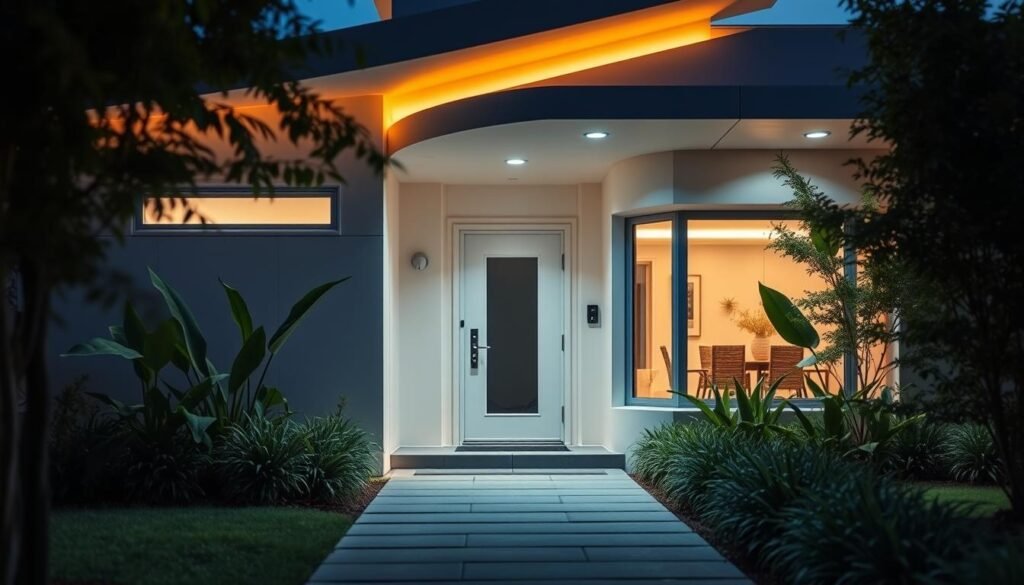
- Enhanced security features, such as motion detection and alerts
- Remote monitoring and control of smart home devices
- Energy efficiency and cost savings through automated routines
Traditional vs Smart Security Systems
Old security systems are now mostly replaced by smart ones. Smart home devices, cameras, and locks make homes safer and easier to manage.
Essential Components of a Smart Home Security System
A smart home security system has key parts like a control panel, sensors, and smart devices. The control panel talks to sensors and devices to keep an eye on things in real time. Smart home automation makes the system better and more convenient.
Some important parts of a smart home security system are:
- Smart locks, which add more security and can be controlled from afar
- Security cameras, which let you see what’s happening and help stop crime
- Sensors, which find motion and other security risks
A wireless security system is popular because it’s flexible and easy to use. It uses Wi-Fi to talk and has backup plans for when the internet is down. You can watch and control it from your phone, making you feel safer.
Home security kits start at about $150. Monitoring services cost around $18 a month. Smart home security systems also have cool features like video watching and smart alerts. 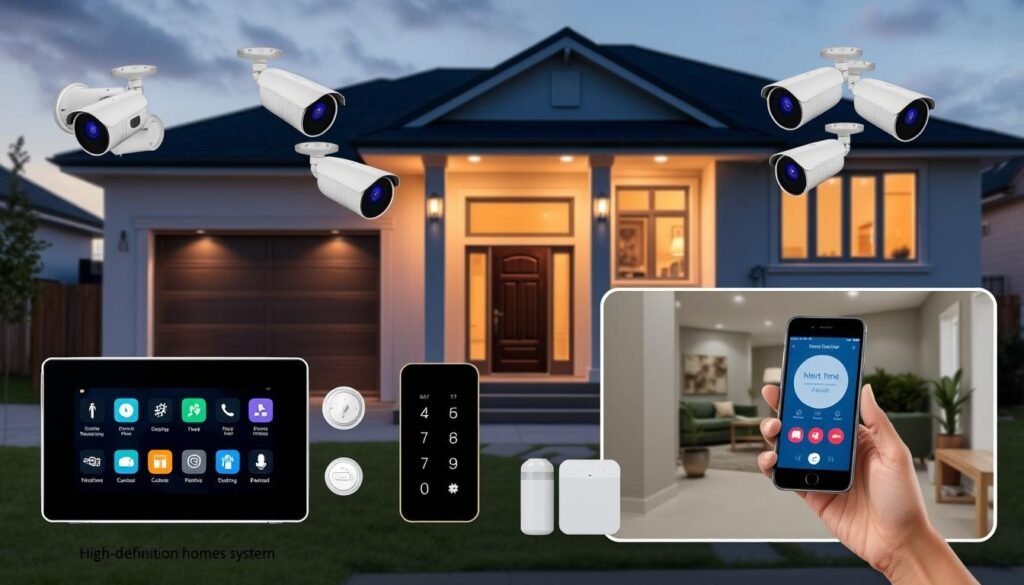
| Feature | Description |
|---|---|
| 24/7 Monitoring | Always watching to keep your place safe |
| Mobile Access | Control and watch your security system from your phone |
| Advanced Video Surveillance | Clear cameras, night vision, and smart alerts |
How to Secure Your Home with Smart Technology
To keep your home safe with smart tech, first figure out what you need. Then, make a plan to install smart devices like locks and cameras. Setting up routines is also key. This way, your home and family stay safe.
When picking smart home devices, think about your home’s needs. For example, pets or kids might need cameras with alerts. Make sure devices work well together too.
Assessing Your Home’s Security Needs
First, find out where your home might be weak. Then, pick the best ways to fix these spots. This could mean smart locks, cameras, or lights that turn on when they see motion. A good plan makes your home a safe place for your family.
Creating a Security Implementation Plan
Next, decide which smart home devices you’ll use and how to set them up. Your plan should also cover keeping your system up to date. By choosing the right smart home devices and following home security tips, you can keep your home and family safe.
Smart Locks and Access Control Solutions
Smart locks are key to keeping your home safe. They let you control them from anywhere, adding security and ease. 70% of Americans use their garage door as the main entry. So, it’s vital to secure it well.
Smart locks from brands like Kwikset, Yale, and Schlage work with Alarm.com systems. They offer more security features.
Smart locks have many benefits. They include:
- Remote access and control
- Automated security systems for better security
- Customized smart home solutions for your needs
Smart devices also let you watch your home live and get alerts. This gives you peace of mind. Adding security cameras to Alarm.com systems gives you a full view of your home’s safety.
Getting smart locks and access control makes managing your home easier. You can get help to make sure everything works well together.
Surveillance and Monitoring Technologies
Surveillance and monitoring tech are key in smart home security. They give users more convenience and peace of mind. Security cameras are a big part of these systems. They let users watch and detect things in real time.
With smart home automation, users can get alerts and control their homes from anywhere.
More people are using smart home security systems. This is because they are easy to set up and use. Some main benefits are:
- Remote monitoring and control
- Real-time alerts and notifications
- Enhanced detection capabilities
- Increased convenience and peace of mind
Recent stats show 55% of people worry about their smart home’s security. Also, 72% are worried about their data privacy. To fix these worries, smart home makers are working on new standards like Matter. This will make smart home devices more secure and work better together.
Smart home systems can also work with other devices. Like lights and energy monitors. This makes homes more secure, comfortable, convenient, and energy-saving. With smart home tech, users get more security, comfort, and savings.
| Technology | Benefits |
|---|---|
| Security Cameras | Visual monitoring and detection |
| Smart Home Automation | Real-time alerts and notifications, remote control |
| Smart Locks | Remote locking and unlocking, enhanced security |
Smart Home Integration and Automation
Smart home automation makes homes safer and easier to control. It lets you connect many devices with a wireless security system. This includes smart doorbell cameras and smart locks.
Automated routines are a big plus. You can set lights to turn off when you leave. Or, your thermostat can change the temperature when you’re away. This saves energy and money.
Mobile apps let you check and control your home from anywhere. You get alerts if something happens.
Some cool smart devices are smart thermostats, smoke detectors, and garage door openers. They work with your wireless security system. You can use Alexa, Google Assistant, or Siri to control them with your voice.
Smart home tech makes life better. It’s more convenient, secure, and saves energy. By getting a wireless security system and smart devices, your home becomes safer and more comfortable.
| Device | Features |
|---|---|
| Smart Doorbell Camera | Motion sensor alerts, remote communication, video recording |
| Smart Locks | Keyless entry, individual codes, remote locking/unlocking |
| Smart Thermostats | Utility bill savings, automated temperature adjustments |
Cost Considerations and Budget Planning
Smart home security systems can be pricey. But, they’re getting cheaper and more people can afford them. First, think about how much you need to spend. This depends on what you want in your system.
A smart home has many parts like speakers, lights, and cameras. The price changes based on what you pick and how it’s set up. Things like how automated you want it and the devices you choose matter.
Some affordable parts include the Wyze Cam v3 and Blink Mini. Start small and add more as you can. Look for deals and think about doing it yourself. This way, you can get a smart home without breaking the bank.
When picking smart home devices, look at these features:
- Smart cameras: resolution, night vision, two-way audio, and motion detection
- Smart locks: compatibility with existing deadbolts, remote access via smartphone apps, multiple entry methods, and long-lasting battery life
- Motion detectors: effective detection ranges and pet-friendly options to avoid false alarms
Getting a smart home security system can make your home safer and more convenient. It can also save you money on bills and insurance. Use these home security tips and the best smart home devices to enjoy these benefits.
| Device | Cost | Features |
|---|---|---|
| Wyze Cam v3 | $25 | Night vision, motion detection, two-way audio |
| Blink Mini | $35 | Night vision, motion detection, two-way audio |
| Aqara Door and Window Sensor | $15 | Wireless connectivity, adequate battery life, immediate alerts |
Maintaining and Upgrading Your Smart Security System
To keep your smart home security system safe and working well, you need to update it often. This means doing software updates, watching for security issues, and swapping out old parts. A smart home automation system helps keep your home safe from intruders and other dangers.
A wireless security system is simple to set up and doesn’t need any big changes to your home. But, you must protect your Wi-Fi network. This means changing passwords, updating your router, and hiding your network. Using strong, unique passwords helps keep your network safe.
Here are some ways to make your router safer:
- Use the latest security settings and update your router’s software
- Turn off remote access, UPnP, and WPS
- Create a separate network for your security devices
Also, keep your phone’s software and apps up to date. Use two-factor authentication on your phone. These steps help protect your smart home automation system from hackers and keep your home safe.
Regular care and updates stop security problems and keep your wireless security system working right. By keeping up with updates and securing your network, you can trust your smart home security system.
| Security Measure | Description |
|---|---|
| Regular Software Updates | Help prevent security breaches and ensure system functionality |
| Network Security | Protect against cyber threats and unauthorized access |
| Two-Factor Authentication | Add an extra layer of protection for mobile devices |
Conclusion: Embracing Smart Security for Peace of Mind
Smart security technology brings peace of mind to homeowners. It offers protection, convenience, and control. With smart home systems, you can watch over your family and home from anywhere.
Smart homes also save money on energy and insurance. Smart locks and lights make your home more efficient. This can save you money over time.
Choosing smart home security is a smart move for your family’s safety. This article helps you find the right security for your home. Enjoy a safe and smart home with peace of mind.