
This article may contain affiliate links. If you click on these links and make a purchase, we may receive a small commission at no extra cost to you. This helps support our website and allows us to continue to produce content like this. Thank you for your support!
Have you ever wondered how technology could change your gardening?
Technology is now a big part of gardening. It brings new tools like smart planters and automated watering systems. These tools make our gardens more efficient and green.
More gardeners are using these smart tools. They help plants grow better and use less water. Whether you’re new to gardening or have been doing it for years, technology makes it easier.
Let’s explore how these new technologies are changing gardening.
The Rise of Smart Gardening
Smart gardening has changed how we garden by using technology. It gives us data and automated solutions. Now, we can care for plants better and more easily.
Soil moisture sensors are key in gardening. They check soil moisture levels. This helps us water plants just right, without guessing.
Automated watering systems make watering plants easier. They adjust watering based on soil moisture and weather. This is great for those who are busy or travel a lot.
Smart gardening tools also teach us about plants. They help us understand plant biology and care. This makes gardening easier and saves time.
Smart gardening helps plants grow better. But, it can be expensive to start. Yet, technology is getting better. This makes smart gardening more for everyone.
| Feature | Benefit |
|---|---|
| Soil Moisture Sensors | Continuous monitoring of soil moisture, optimizing watering schedules |
| Automated Watering Systems | Precise watering based on soil sensor data and weather forecasts |
| Plant Health Apps | Comprehensive plant care management including plant identification and growth tracking |
| Remote Monitoring | Ability to manage garden systems from anywhere via smartphones or computers |
| Educational Value | Deepening understanding of plant biology and care requirements |
| Hydroponic Systems | Enabling soil-less gardening, ideal for limited spaces or harsh climates |
Soil Sensors: The Underground Informants
Soil sensors are key in modern gardening. They act as underground informants, giving vital info on garden health. These devices can *real-time monitor soil conditions*, like moisture, pH, and nutrients.
This info helps gardeners decide when to water and fertilize. It ensures plants get exactly what they need for growth.
Using tech like this means quick adjustments can be made. No more guessing. Gardeners get accurate info on their devices. This is great for both new and seasoned gardeners.
Soil sensors work with mobile apps to change plant monitoring. Now, gardeners can check soil conditions anytime. This helps with watering and nutrients, making it efficient and green.
These smart gardening tools are easy to use. They work with apps and other devices for a healthy garden.
| Feature | Advantage | Benefit |
|---|---|---|
| Continuous Monitoring | Real-time data on moisture, pH, and nutrients | Optimal plant health |
| App Integration | Accessible soil data from anywhere | Convenient and timely adjustments |
| Automated Watering | Data-driven irrigation | Reduced water waste |
Automated Watering Systems: Precision Irrigation
Automated watering systems have changed gardening by saving water and resources. They use soil sensors and weather forecasts to know how much water plants need. This way, plants get the right amount of water, keeping them healthy and strong.
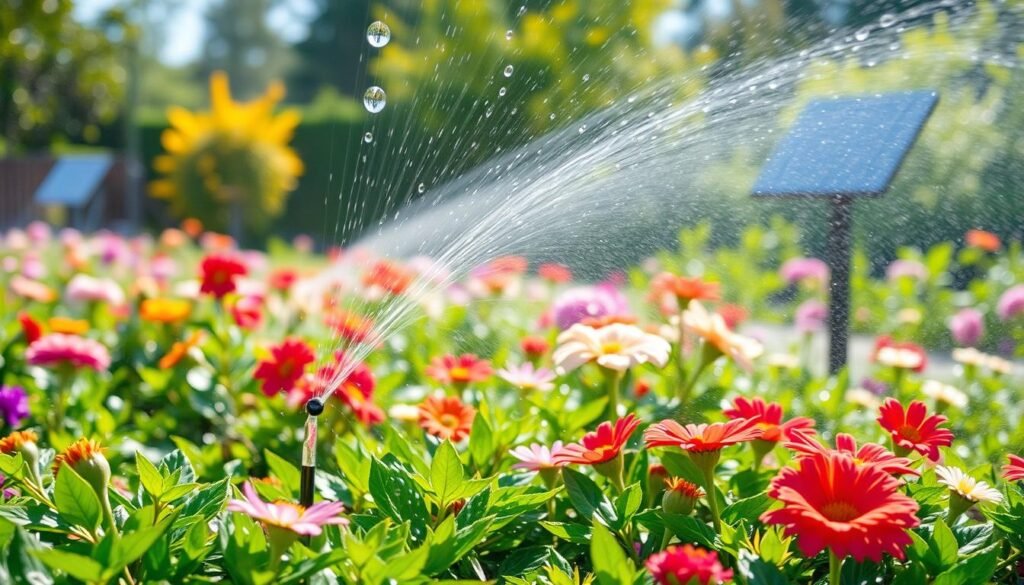
These systems also help save resources. They are key in agriculture, which uses a lot of water. Using tech like solar-powered systems helps us garden in a green way.
- Sancruz IC205S has an internal pump and flows 400 ml per minute. It comes with 32.8 feet of tubing and 15 drip stakes. It costs $30 and is easy to program.
- Onsast AUTO01 has an external pump and flows 800 ml per minute. It has 24 feet of tubing and 12 adjustable drippers. It costs $13.50 after a discount and lets you adjust water flow.
Knowing what your houseplants need is key for these systems. The TESLA Irrigation System has a 10-drip-head pack and a 10m hose. It also lets you control it with your smart home devices.
| Model | Water Flow Rate | Tubing Length | Drippers | Power Supply | Price |
|---|---|---|---|---|---|
| Sancruz IC205S | 400 ml/min | 32.8 ft | 15 nonadjustable | Rechargeable lithium-ion/USB-C | $30 |
| Onsast AUTO01 | 800 ml/min | 24 ft | 12 adjustable | Wired 12-volt DC | $13.50 after 25% discount |
Accessibility of Smart Gardening Technology
Smart gardening technology has changed how we garden. It’s now easy and open to everyone. Thanks to simple apps and devices, you don’t need to know much tech to start gardening. This makes gardening fun and rewarding for more people.
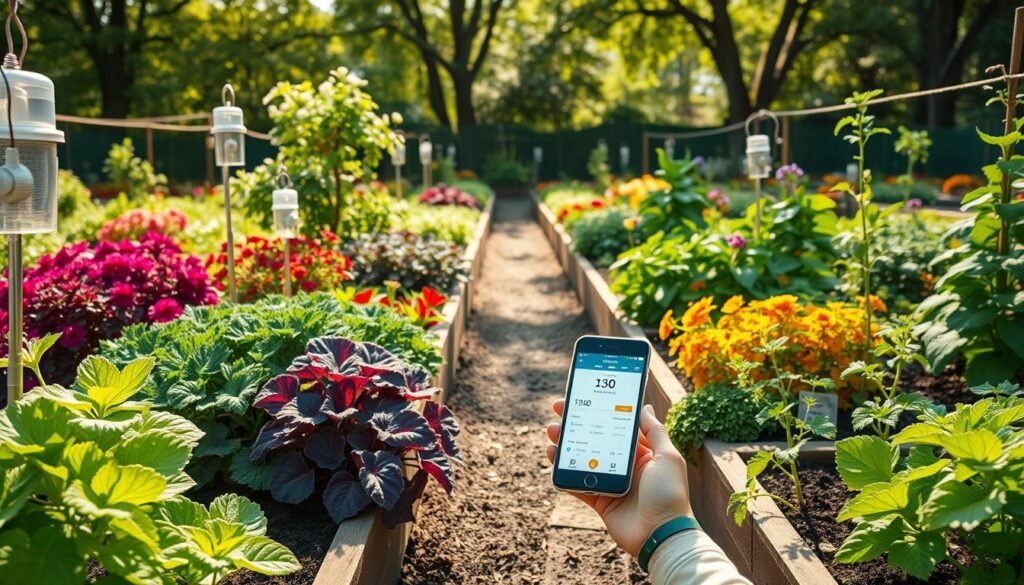
These new tools help manage your garden better. Soil sensors check moisture, pH, and nutrients. They give you updates so you can care for your plants right.
Automated watering systems use this info to water plants just right. They save water and prevent plants from getting too wet or dry.
These tools also make plants grow faster and healthier. They can cut water use by 30% in big nurseries. Apps can spot pests early, helping plants live longer.
More people are using these tools, up 40% in two years. They make gardening easier and teach you a lot. 82% of app users say they know more about plants.
These systems also save time. They can cut down watering tasks by 2 hours a week. So, even busy people can enjoy gardening with these tools.
Plant Care, Smart Planters, Automated Watering Systems, and Growth Sensors
Modern technology has changed how we care for plants. Smart planters, automated watering, and growth sensors work together. They make tasks like watering and tracking growth easier, keeping plants healthy with less effort.
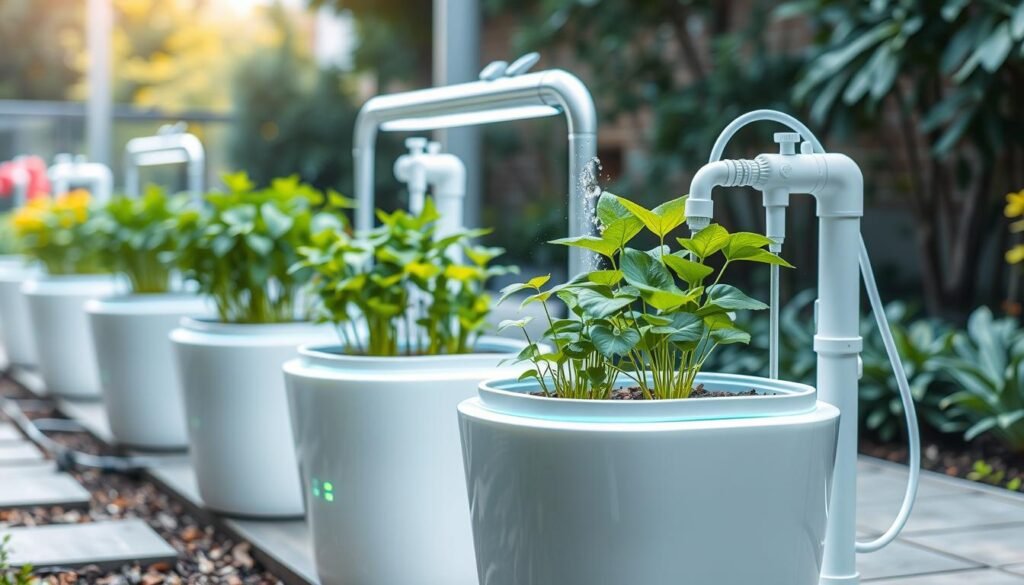
The LetPot MP1 Modular Smart Planter is a great example. It was $299.99 but now costs $228.76, saving $71.23. It has six pots that can grow up to 23 by 23 inches tall. It’s also waterproof, perfect for indoors or outdoors.
The MP1 has a self-watering system. It can water plants for 30-45 days without help. You can control when and how long it waters through the LetPot App.
This smart planter uses a bottom reservoir and wicking system. It automatically waters plants as needed. You can also set up a big hydroponic garden or a trio of planters. The pump can lift water up to 3 meters, great for vertical gardens.
| Feature | Detail |
|---|---|
| Original Price | $299.99 |
| Sale Price | $228.76 |
| Number of Pots | Six |
| Self-Watering Duration | 30-45 days |
| App Control | Yes (Android & iOS) |
| Waterproof Rating | IP66 |
| Water Lift Capacity | 3 meters |
Smart flower pots and planters do more than save time. They let you monitor your plants and get care tips. They help plants grow better, use less water, and support green gardening. Even though they cost more and need upkeep, they’re worth it for gardeners of all levels.
The use of smart planters and systems is changing plant care. It makes gardening easier and more effective. This way, plants grow better and stronger.
Garden Savvy’s GardenAI: Your Personal Gardening Assistant
Garden Savvy’s GardenAI combines AI with gardening. It’s a 24/7 personal gardening assistant. It gives you real-time, tailored gardening advice on your smartphone.
The AI-driven GardenAI app solves gardening problems fast. It gives expert advice on watering and soil conditions. This helps gardeners make better choices for their gardens.
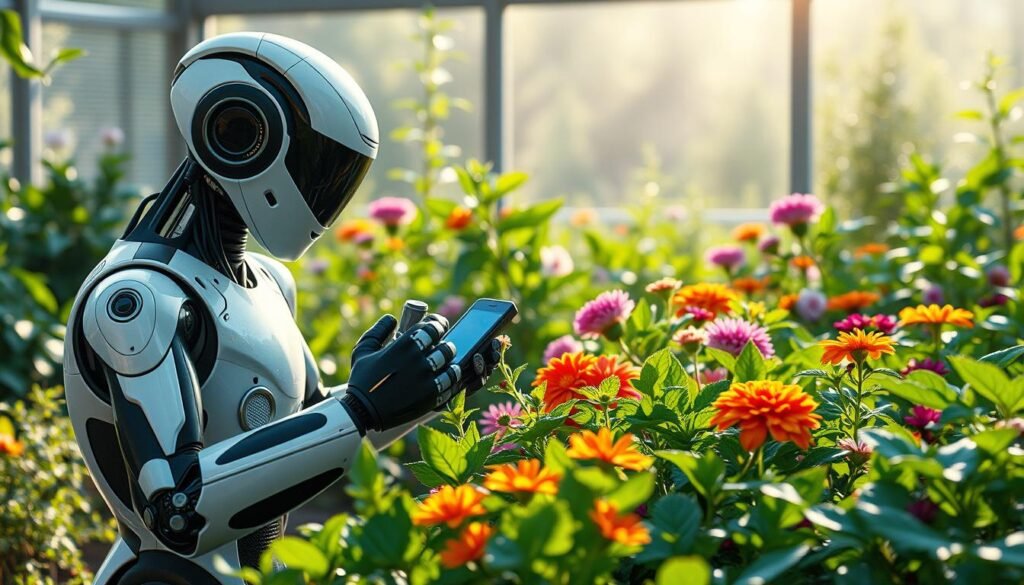
GardenAI is interactive. It uses data from sensors, weather, and plant care. This gives gardeners exact advice on watering, fertilizing, and pest control.
It also helps save water and prevent over or under-watering. This makes gardening more sustainable.
Garden Savvy’s GardenAI goes beyond old gardening ways. It makes expert advice easy for everyone. Whether you’re new or experienced, GardenAI helps you succeed in gardening.
Hortisketch Garden Planner: Designing Your Dream Garden
Hortisketch is a digital tool by Garden Savvy that changes how we plan gardens. It lets gardeners design their dream gardens easily. It looks at sunlight, soil, and water to make sure plants grow well.
Hortisketch’s growing calendar is a big plus. It updates when to plant and harvest based on your area’s weather. This means gardeners get the latest info for their garden’s needs. Here’s why Hortisketch is key for garden lovers:
- It tracks sunlight to find the best spots for plants.
- It checks your soil to suggest the right plants.
- It makes sure plants get the right water, helping gardens last longer.
The tool is easy to use, no matter if you’re new or experienced. Its simple design makes planning gardens fun. This helps everyone grow better plants, whether for eating or decoration.
| Feature | Description |
|---|---|
| Sunlight Exposure | Analyzes sunlight patterns to optimize plant placement. |
| Soil Type Analysis | Evaluates soil characteristics to recommend suitable plants. |
| Water Needs Assessment | Ensures plants receive the appropriate amount of water. |
| Dynamic Growing Calendar | Updates schedules based on climatic zones and seasonal changes. |
| User-Friendly Interface | Caters to all levels of gardening experience. |
Hortisketch gives gardeners a complete tool for making smart choices. It helps create gardens that are not just beautiful but also healthy. With Hortisketch, planning your garden is easy and fun.
Smart Sprinklers and Irrigation Systems
Smart sprinklers and irrigation systems change garden care by giving precise water use. They use Remote Scheduling and Control tech. This lets users control watering through apps.
In places like Oklahoma, water used outside can be 30-50% of home water. Smart systems cut down on this. For example, in Las Vegas, Nevada, ET controllers cut irrigation by 20%.
These systems adjust water based on weather and soil moisture. They work for different garden areas and weather. This helps plants grow well and saves water. A study on St. Augustine turfgrass showed a 43% cut in summer watering without harming the turf.
Soil moisture sensors save a lot of water. They can save 72% and 34% in droughts. These sensors cost between $99 and $165. Rain and freeze sensors pay for themselves in less than a year.
- Precision Watering: These systems ensure plants get just the right water.
- Remote Gardening Management: Control watering from anywhere with a smartphone or computer.
- Sustainability: They save water and reduce pollution, making the environment better.
- Enhanced Economic Viability: They cut down on water and energy costs for farms.
Smart irrigation systems cost more at first but save money in the long run. They use less water than old systems. They need little upkeep but make crops better and more productive.
Weather-based systems adjust watering based on weather. This stops too much or too little water. These systems are key for today’s gardeners, thanks to Remote Scheduling and Control.
| Feature | Smart Irrigation Systems | Traditional Irrigation Systems |
|---|---|---|
| Initial Cost | Higher | Lower |
| Water Savings | Significant | Minimal |
| Maintenance | Minimal | Regular |
| Environmental Impact | More Sustainable | Less Sustainable |
| User Control | Remote Scheduling and Control | Manual |
Smart Plant Sensors for Optimized Growth
In recent years, smart technologies have become more popular for watching over plants. These systems use advanced sensors and IoT to gather data on plants and their environment. They do this in real-time.
Smart plant sensors send alerts to gardeners when something needs attention. They keep an eye on light, humidity, and soil conditions. This helps plants grow better and stay healthy.
Smart plant monitoring systems offer many benefits:
- They make using resources more efficient.
- Plants grow better and produce more.
- They help gardeners make better choices.
- They let gardeners check on plants from anywhere.
- They collect and analyze data better.
For example, smart gardening helps gardeners know exactly when to water and how much. It also tells them about light and temperature. This helps plants live longer and stay healthy.
Smart sensors also help save water. They make sure plants get the right amount of water. This is good for the planet. Plus, they help teach people about gardening with technology.
Smart plant sensors make gardening better and more efficient. They automate watering and care. This helps both home gardeners and professionals grow plants better.
Conclusion
As we look to the future of gardening, we see big changes coming. New tech like AI, smart sensors, and automated systems are changing how we garden. These tools make gardening more efficient and fun.
Smart devices like soil sensors and automated watering systems are key to this change. For example, these systems can adjust watering based on soil moisture and weather. This saves water and makes gardening easier for those with busy lives.
Plant health apps are also changing the game. They help users identify plants, spot diseases early, and track growth. These apps are making gardening smarter. AI and machine learning will soon offer even better ways to monitor and care for plants.
The future of gardening is exciting with these smart tools. They make gardening easier and help the environment by saving water and energy. As these technologies get better, gardening will become more sustainable and rewarding.
Some of the links in this post are affiliate links, which means I may earn a commission at no extra cost to you if you click through and make a purchase. This helps support the blog and allows me to continue to make free content. Thank you for your support!